San Francisco Water Sports for Beginners: Everything You Need to Know
The most common thing first-timers say when they step back onto the dock is some version of "I can't believe I waited this long." We hear it constantly. And we get why — from the shore, SF Bay looks big and cold and like something that belongs to athletes or adventurers or people who grew up around boats. None of those things are actually true in the way you think. SF water sports for beginners are accessible, and San Francisco Bay near Crane Cove Park is a lot more forgiving than it looks. The water is protected. The gear is solid. The instructors are warm and care about what they do. This guide covers everything you need to know before your first time on the water — what to choose, what to expect, and why the anxiety you're feeling right now is way bigger than the thing itself.
Kayaking or Paddle boarding: What's Right for You?
Kayaks are lower to the water, which makes them feel more stable and enclosed — a lot of first-timers find them less intimidating because you're sitting down and it's harder to fall off. If you're bringing a nervous partner or a friend who needs a little extra encouragement, a tandem kayak (two seats, one boat) is a great move. You paddle together and look out for each other, which changes the whole dynamic.
Stand-up paddleboards are more of a full-body experience. You're upright, which means you feel every shift in the water, and there's a natural balance challenge — especially in the first ten minutes. But once you find your footing, SUP connects you to the Bay in a way that's hard to describe. You can see further, you feel more free, and it's a real workout if you want it to be. If you're reasonably coordinated and willing to embrace a wobbly start, most beginners find SUP more exciting than they expected. Either way, there's no wrong answer — we can talk through it when you arrive.
What "No Experience Required" Actually Means
When we say no experience required, we mean it exactly. Our instructors have taught paddle technique to people who've never been on a boat of any kind, people who told us they were terrified of open water, kids who weren't sure they could balance, and adults who came in convinced they'd be the worst person we'd ever seen on a board. None of them were.
The Dogpatch waterfront is partially protected, the water closer to the dock is manageable even on windier days, and our instructors know exactly how to read conditions and route you appropriately. Safety is taken seriously — gear is inspected, briefings are thorough, and every rental and tour has an instructor who actually knows the water — but safety here doesn't mean scary. We deliver all of it without killing the vibe. Think of it less like a safety briefing and more like a friend explaining the basics before you head out together.
Lessons vs. Rentals: Which Should You Start With?
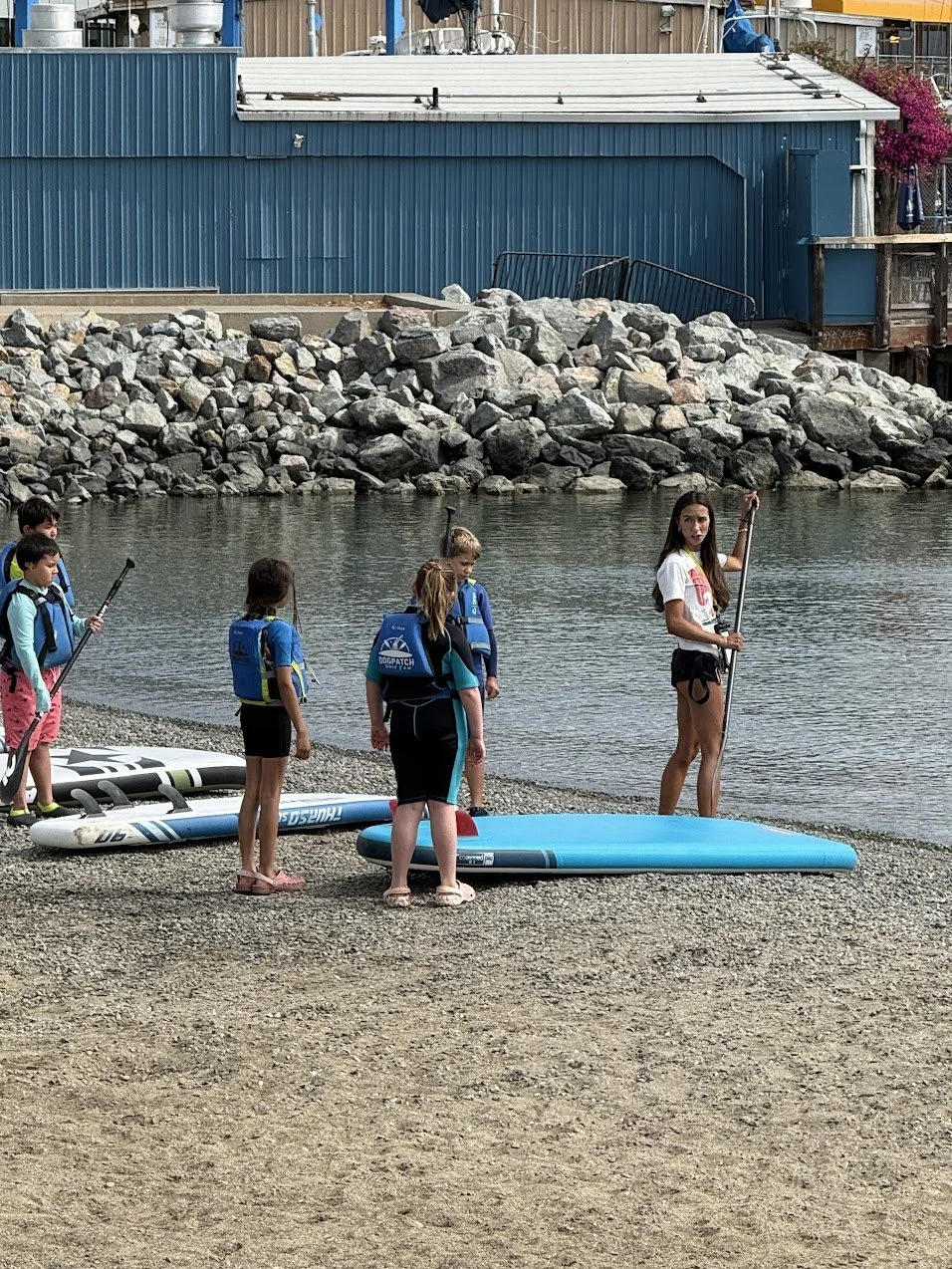
If you've never paddled before, our recommendation is clear: start with a lesson. The Learn to Paddle Board experience runs 90 minutes, costs $124 per person, and is built specifically for first-timers. You'll start on the beach — balance drills on the board before it's even in the water — and work your way out gradually. By the end, you're actually paddling on SF Bay, not just standing on a dock looking at it. The structure matters. Having an instructor there while you're figuring it out is a completely different experience than being handed gear and waved off.
Rentals ($45/hour for a single kayak, $40/hour for an SUP, two-hour minimum) are ideal once you've got a baseline. After your first lesson, a self-guided rental feels completely different — you know what you're doing, you can go at your own pace, and you can explore. A lot of people do a lesson on visit one and a rental on visit two, which is honestly the perfect progression. If you're confident you've got some prior experience and just want to get on the water, rentals are totally fine from day one. But if there's any doubt, book the lesson. You won't regret it.
What SF Bay Is Actually Like for Beginners
The part of the Bay you'll paddle is not the open ocean. From Crane Cove, you're paddling in a sheltered section of the southern waterfront that sits well inside the Bay — not out past the bridge, not near the shipping lanes. The water is calm relative to what most people picture when they imagine SF Bay. Mornings are glassiest, when wind hasn't had time to build, and that's when the water looks and feels like a completely different place.
Water temperature on the Bay runs cool — roughly 55–60°F in summer. You won't be swimming in it, and the gear we provide (PFDs, appropriate paddling attire guidance) keeps you comfortable on the surface. Thousands of guests have paddled these waters safely in our first year at Crane Cove alone. We read conditions before every session. If a day isn't right, we'll tell you. That's part of what 5.0 stars means in practice — not just good vibes, but real accountability about keeping people safe and happy on the water.
What to Wear and What to Bring
This is simpler than people expect. You don't need a wetsuit, especially May through September. Dress in athletic layers you're comfortable getting wet — a rash guard or quick-dry shirt works great, and a light windbreaker for the return paddle is never a bad call. Avoid anything cotton if you can; it gets cold fast when wet. Water shoes or old sneakers are better than sandals on the dock (flip-flops and paddleboards don't mix). Sunscreen is mandatory — the glare off the water is real, and a cloudless SF day will get you faster than you think.
On-site at Crane Cove you'll find lockers, a changing room, and a rinse station — so you're covered for the post-paddle routine. Leave your valuables in the car or in a locker; traveling light makes everything easier on the water. If you're heading straight from work or another commitment, plan ten minutes of buffer — gear-up takes a few minutes, and you'll want to arrive relaxed rather than rushing to the dock.
Your First Day on the Water: Realistic Expectations
Here's the truth: you will probably wobble. If you're on a SUP, the first few minutes will feel a little precarious. That's the fun part. Almost every first-timer gets it within 20 minutes, and most people stop thinking about balance entirely once the view of the SF skyline from the water kicks in. The Bay Bridge from a paddleboard is one of those sights that makes you feel genuinely lucky to live here. The harbor seals and herons and pelicans help too.
What most first-timers don't expect is how present it makes them feel. You can't be on a paddleboard or kayak on SF Bay and also be on your phone. The focus required — gentle as it is — pulls you out of whatever was running in your head before you arrived. That's what people mean when they say "I needed this." Not the exercise, not the adventure, but the hour of being completely in their body and nowhere else.
Ready to try it? Book a lesson or tour to get started with an instructor by your side, or check out self-guided rentals once you've found your footing. We've got 5.0 stars across every review platform — and we've done this with thousands of first-timers. You're in good hands.