Wildlife Kayaking on San Francisco Bay
Wildlife Kayaking on San Francisco Bay: What You'll Actually See
Most people think of SF Bay as a commute backdrop — something to cross or look at from a distance. The people who've been out on it in a kayak know something different. SF Bay wildlife kayaking puts you in the middle of a working estuary that's home to hundreds of species, and from a kayak you're not observing from the shore or through glass. You're at eye level with the water, moving quietly, and the wildlife treats you accordingly. Harbor seals surface a few feet away. Great blue herons hold their spot on a piling and stare you down. Bat rays pass beneath the hull like slow, dark shadows. This is the Bay most San Franciscans have never seen, and a kayak is the best possible ticket in.
Harbor Seals: The Bay's Most Reliable Surprise
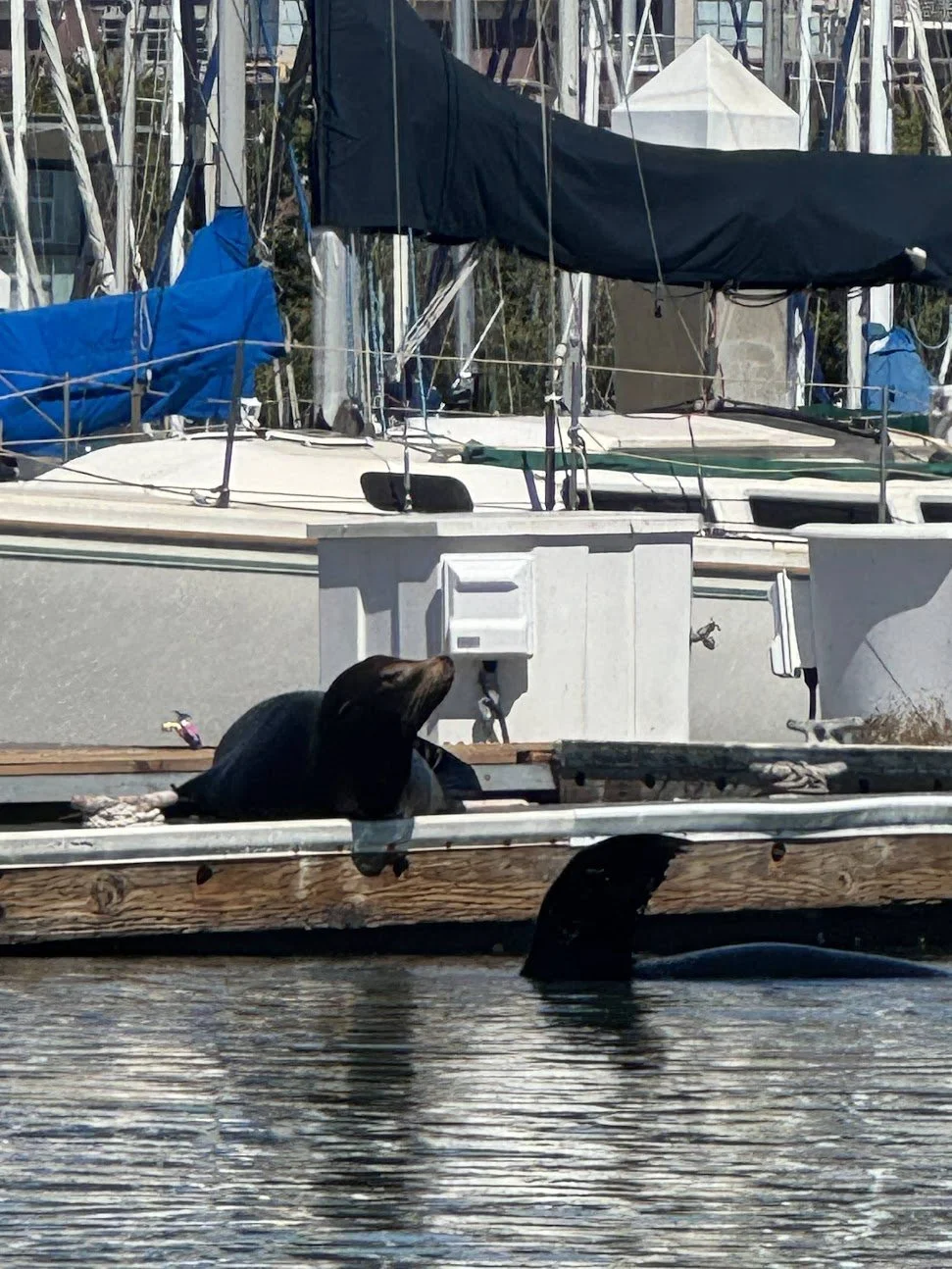
Harbor seals are out here every single day, and they are consistently the wildlife encounter people remember most. They hang on buoys, float near pilings, and have a habit of surfacing unexpectedly — sometimes so close to your kayak you could reach out and touch them (don't).
Near Crane Cove and along the route toward McCovey Cove, seal sightings are routine. The ones that pop up beside your boat always get a reaction: a sharp inhale, a laugh, a frenzy of pointing. Their curiosity about kayakers is genuine — they'll often surface, study you for a moment, and dive back under. It's one of those moments that's genuinely hard to predict and genuinely impossible to forget. When it happens, just sit with it. They'll disappear on their own schedule.
The Birds: Herons, Pelicans, and What Else Is Up There
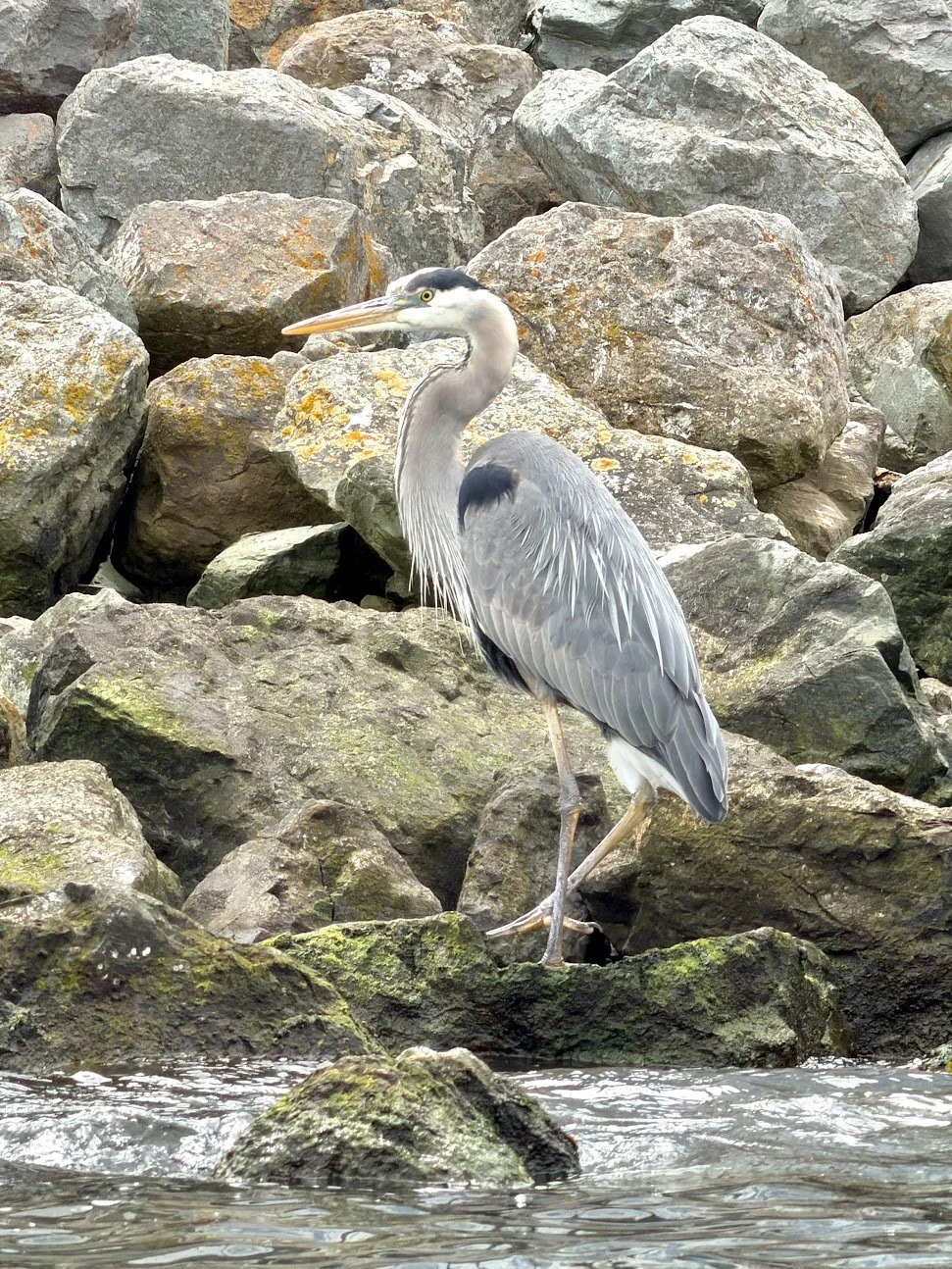
The birdlife along the South Bay waterfront is spectacular, and a lot of it goes unnoticed from land. Great blue herons work the shoreline in slow, deliberate steps — they're big birds, close to four and a half feet tall when standing, and striking up close. When one lifts off near your kayak, it's one of those moments where you actually stop paddling.
Brown pelicans glide in formation just above the water, sometimes a dozen at a time, and they're a regular feature of the Bay Bridge Tour route. Cormorants dive from the surface and seem to disappear completely — they're hunting, and they're good at it. Snowy egrets, black-crowned night herons, and various shorebirds round out the cast depending on time of year. Early mornings in spring and early summer are the most active. Bring a sharp eye and a quiet paddle stroke.
Bat Rays and What's Under the Surface
Bat rays are one of the Bay's best-kept secrets — and one of the things that makes SF Bay wildlife kayaking a genuinely multi-dimensional experience. They move through the shallower water near the Cove with slow, fluid wingbeats, and in the right light conditions you can watch them pass directly beneath your hull. They're harmless, graceful, and unmistakably prehistoric-looking.
In season, leopard sharks move through the same shallow zones. The Bay's ecosystem is more complex than most people give it credit for — kelp beds, invertebrates, fish populations, migratory species — and being on the water at surface level gives you a window into all of it. You don't see any of this from the BART window.
The Best Routes for Wildlife Sightings
Launching from Crane Cove and paddling south toward McCovey Cove and the Mission Creek inlet puts you in the most consistently active zone for wildlife. The protected southern waterfront near the Cove has shallow areas where rays and leopard sharks tend to move through, and the pilings and buoys along the route toward Oracle Park are reliable seal hangouts.
The Bay Bridge Kayak/SUP Tour (2 hrs, $124/person) specifically routes through areas with strong seal activity — our guides know the spots. Early morning — before 10am — maximizes your chances across all species. The water is calmer, boat traffic is lower, and the wildlife is more active. If you're booking a rental specifically for wildlife, go early and go toward McCovey Cove.
Responsible Wildlife Paddling
We brief every single group on this before they launch, and it matters. Keep your distance from seals on buoys and haul-outs — they're resting, and paddling toward them is genuinely stressful for them. If a seal surfaces near you, enjoy it, but don't pursue it. Let the animals come to you or go about their business.
Minimize noise near congregating birds and seals. Paddle around, not through, resting groups. The Bay's wildlife is thriving — harbor seal populations have recovered significantly since protections were put in place — and we want it to stay that way. Treating the Bay respectfully is part of why people keep coming back. The wildlife is part of the reason this place is special.
Guided Tours vs. Self-Guided Rentals for Wildlife
Both work. The Bay Bridge Kayak/SUP Tour and Tour the Bay are guided, and the advantage is obvious: instructors who've been on this water hundreds of times know where the seals tend to hang, which routes have the best birdlife on a given morning, and how to read the Bay in real time. You'll see more with a guide, especially the first few times.
Self-guided rentals ($45/hr single kayak, $40/hr SUP, 2-hr minimum) work great once you know where to look. Head south from Crane Cove toward McCovey Cove, stay close to the pilings and buoys, and keep your eyes open. Early morning, quiet strokes, no headphones. The Bay will handle the rest.
Book a guided tour and let our instructors take you to the best wildlife spots on the Bay — or grab a self-guided rental if you're comfortable on the water and want to explore on your own terms. 5.0 stars from people who've seen the seals.